Building Resilient Enterprise Systems: A 10Native Approach
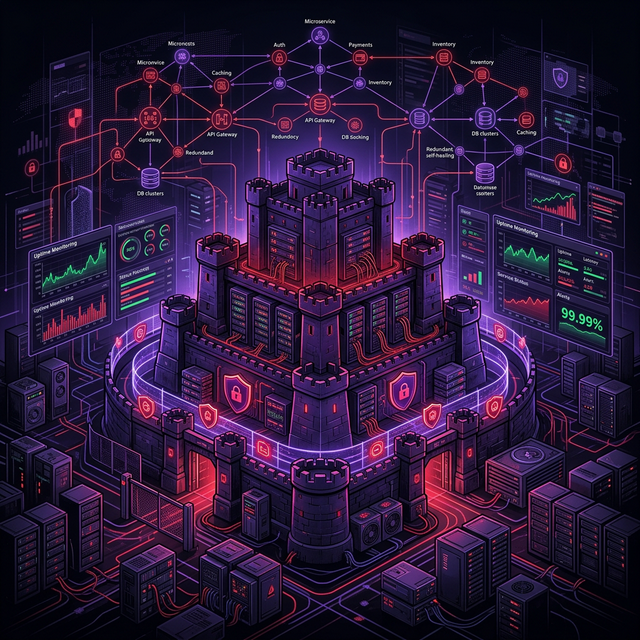
Enterprise systems fail. It's not a matter of if, but when. The difference between industry leaders and laggards isn't the absence of failures — it's how quickly and gracefully they recover.
Defining Enterprise Resilience
Resilience in enterprise systems means maintaining acceptable service levels during and after adverse events. This encompasses:
- Availability: Systems remain accessible when components fail
- Durability: Data survives infrastructure failures
- Performance: Response times stay within SLAs under load
- Recoverability: Systems return to normal operation quickly after incidents
The Four Pillars of Resilience
1. Redundancy Without Waste
Smart redundancy means duplicating critical components without over-provisioning:
- Active-active deployments across multiple availability zones
- Database replicas with automatic failover
- Stateless service design for horizontal scaling
- Content delivery networks for edge resilience
2. Observability-Driven Operations
You can't fix what you can't see. Modern observability goes beyond monitoring:
- Distributed tracing across microservice boundaries
- Structured logging with correlation IDs
- Custom metrics tied to business outcomes
- Automated anomaly detection with intelligent alerting
3. Chaos Engineering
Proactively injecting failures teaches your systems — and your teams — how to respond:
- Scheduled game days that simulate real-world failures
- Automated chaos experiments in pre-production environments
- Failure injection in production with careful blast radius control
- Post-incident reviews that drive architectural improvements
4. Progressive Delivery
Reducing the risk of deployments is a key resilience strategy:
- Canary deployments that expose changes to a small percentage of traffic
- Feature flags for instant rollback without redeployment
- Blue-green deployments for zero-downtime releases
- Automated rollback triggers based on error rate thresholds
The Cost of Downtime
For enterprise organizations, downtime costs extend far beyond lost revenue:
- Regulatory penalties and compliance violations
- Customer trust erosion and brand damage
- Employee productivity loss and morale impact
- Competitive disadvantage in fast-moving markets
Building for the Unexpected
The most resilient systems are designed with the assumption that every component will eventually fail. This mindset shift — from preventing failure to embracing it — is what separates truly resilient architectures from fragile ones.
At 10Native, we engineer resilience into every system we build. Our approach ensures that your enterprise doesn't just survive disruptions — it capitalizes on them.
10Native Team
Building resilient enterprise solutions in AI/ML, Data Engineering, Fintech & Digital Marketing.